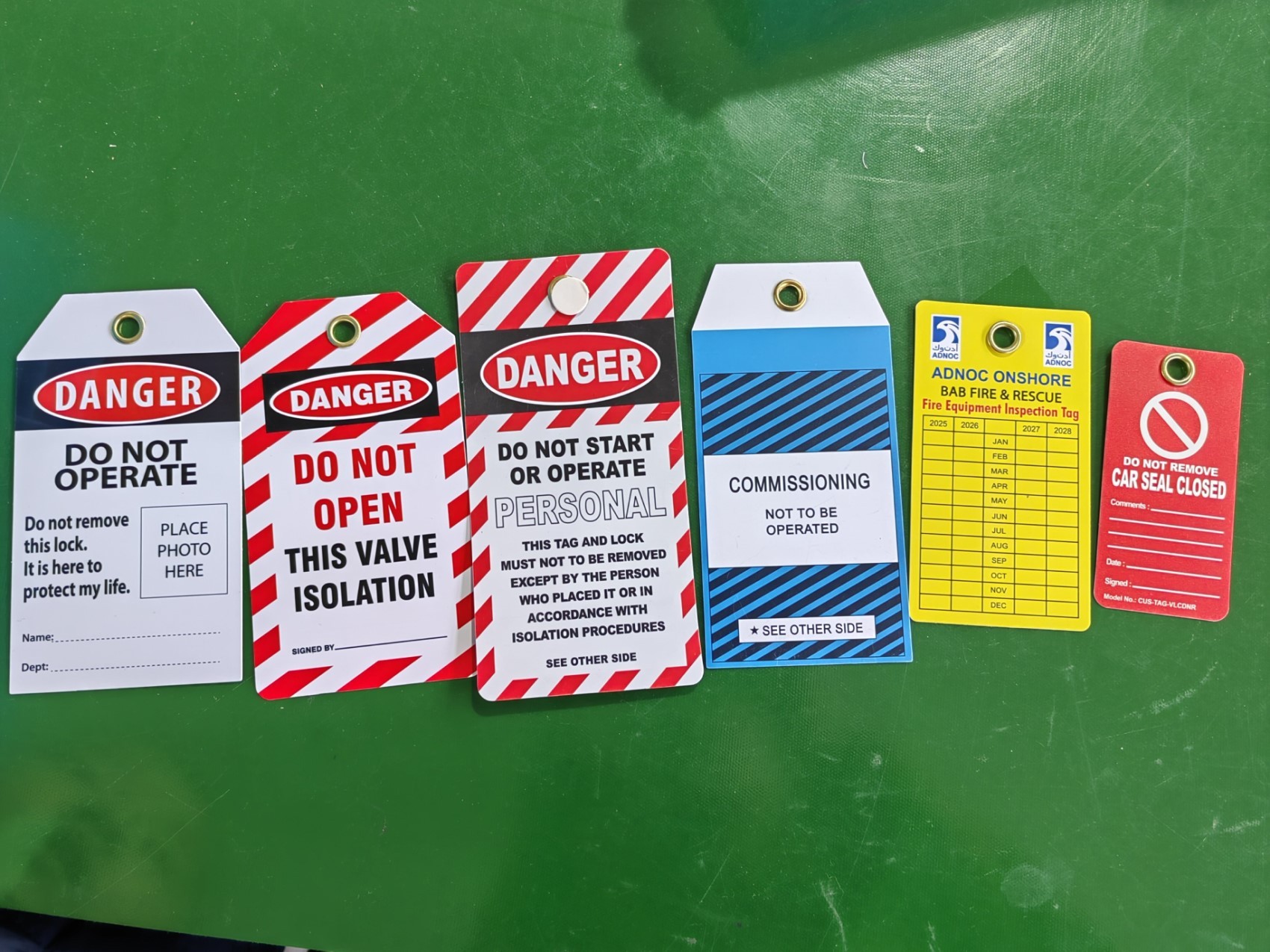
When machinery needs servicing, a single misstep can turn routine maintenance into a life-altering incident. That’s why lockout tagout tags must have specific, non-negotiable features—because they’re not just labels; they’re last lines of defense. These tags serve as clear, authoritative warnings that equipment is unsafe to operate. But not all tags are created equal. Generic paper labels peel, fade, and fail under real-world conditions. The right lockout tagout tags must have durability, clarity, and compliance built into every fiber.
OSHA’s 29 CFR 1910.147 standard mandates that lockout tagout procedures include both physical locks and visible tags. While locks prevent energy release mechanically, tags communicate critical information to everyone nearby. This distinction is crucial: a lock stops a machine, but a tag explains why—and who is responsible. That’s why the content, design, and material of these tags aren’t optional details; they’re central to workplace safety.
What Lockout Tagout Tags Must Have by OSHA Standards
OSHA doesn’t leave room for interpretation. Lockout tagout tags must have several key elements to be considered compliant. First and foremost, they must include a warning statement. "Do Not Start," "Do Not Operate," or "Do Not Energize" are standard phrases that leave no ambiguity. These aren’t suggestions—they’re commands.
Beyond the warning, each tag must have: - Name of the authorized employee applying the tag - Date and time the lockout began - Reason for lockout (e.g., "Repairing conveyor motor") - Department or work group responsible
These data points ensure accountability. If a night-shift technician sees a tagged machine, they can trace it back to the person who locked it out. Without this, confusion spreads, and safety erodes.
Additionally, OSHA requires that tags be durable enough to withstand the environment. A tag on a steam valve in a food processing plant must resist heat and moisture. One on a hydraulic press in an auto shop must resist oil and abrasion. Paper tags won’t cut it. They must have weather-resistant, tear-proof materials like laminated polyester or vinyl.
Why Durability Is Non-Negotiable
Imagine a tag on a piece of outdoor construction equipment. Rain, UV exposure, and temperature swings degrade low-quality materials within days. Ink runs, plastic becomes brittle, and text fades. When that happens, the tag fails its primary mission: communication.
Lockout tagout tags must have materials engineered for longevity. High-quality tags use: - UV-resistant inks to prevent fading - Chemical-resistant surfaces to resist solvents and oils - Reinforced attachment points to prevent tearing at the hole or grommet
In a 2022 audit of 47 manufacturing facilities, 32% of non-compliant LOTO incidents were traced to damaged or illegible tags. In one case, a maintenance worker restarted a conveyor because the tag had faded to near illegibility after three days outdoors. The result: a crushed hand and a $185,000 OSHA fine.
Durability isn’t about aesthetics—it’s about ensuring the message lasts as long as the hazard exists.
Design and Visibility: How Tags Must Be Seen to Be Effective
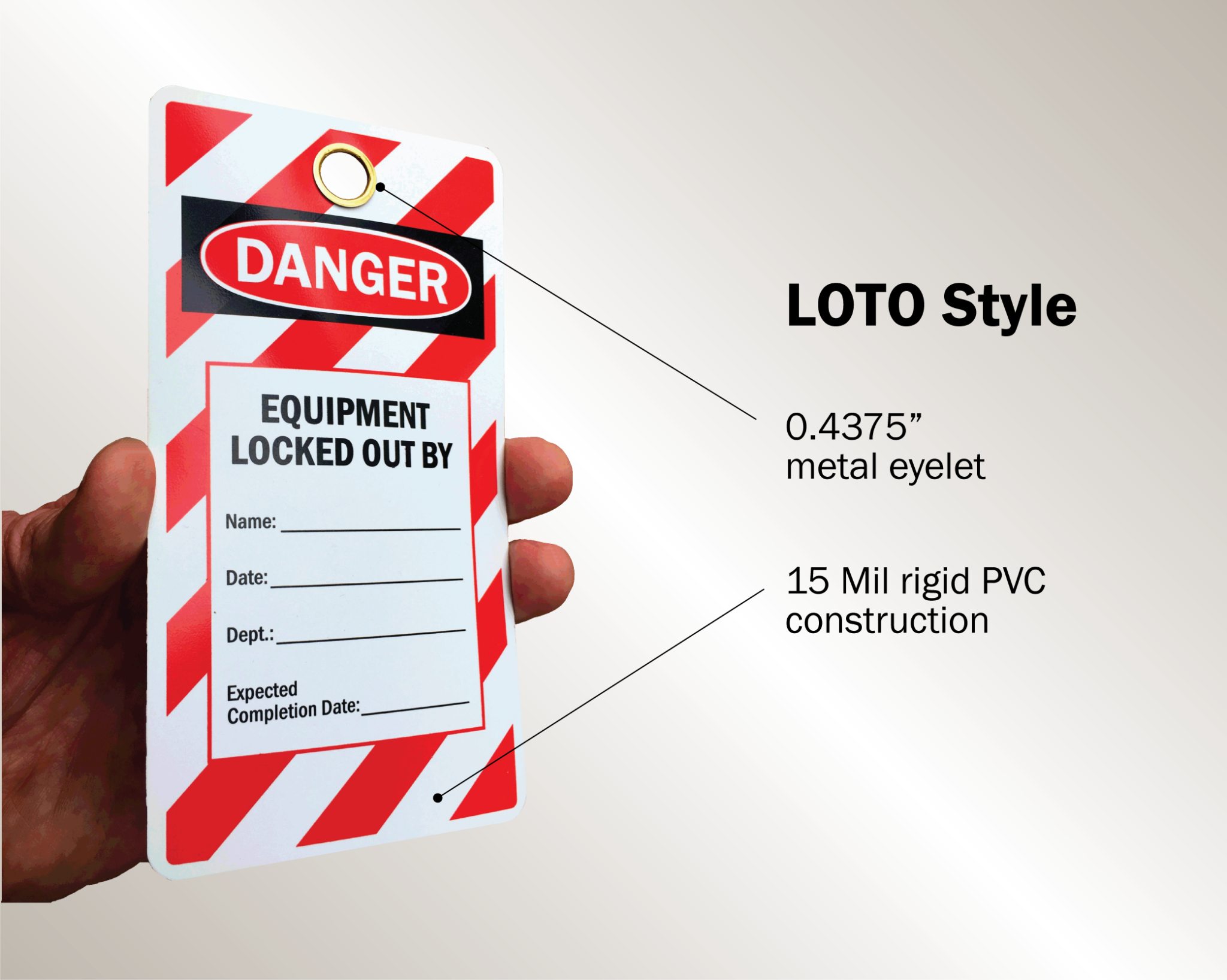
A tag no one notices is as dangerous as no tag at all. Lockout tagout tags must have high-contrast colors and bold typography. OSHA doesn’t mandate specific colors for tags (unlike signs), but industry best practices lean toward red, orange, or fluorescent yellow backgrounds with black text.
The ANSI Z535.5 standard for safety tags recommends: - Large, sans-serif fonts (minimum 12-point, preferably 16+) - Icons or symbols to supplement text (e.g., a lock symbol, prohibition hand) - Minimal wording—no paragraphs, just direct, urgent messages
Clarity trumps creativity. A tag that says “Maintenance in Progress – Contact John Doe, Ext. 402” is better than one that says “Equipment under service.” The first gives action. The second invites assumptions.
One plant in Ohio reduced unauthorized restarts by 78% after switching to standardized, icon-enhanced tags. The change wasn’t in procedure—it was in visibility.
Common Mistakes That Undermine Tag Effectiveness
Even with the right tags, human error can void their purpose. Here are frequent missteps:
- Pre-filled tags: Tags printed with a generic name or date. OSHA requires individualized information for each lockout event.
- Missing contact info: A tag that doesn’t list how to reach the authorized employee creates dangerous guesswork.
- Using pens that bleed or fade: Ballpoint ink on laminated surfaces can smear. Use permanent markers designed for industrial tags.
- Attaching tags loosely: Tags dangling from wires or zipties can fall off. Use reinforced metal grommets and secure fasteners.
- Reusing tags: Once removed, a tag loses its context. Never reapply a used tag.
One refinery learned this the hard way when a worker reused a tag after a brief repair. Later, another team saw the tag, assumed it was active, and delayed a critical startup—causing a $220,000 production loss. Tags are event-specific, not reusable tools.
What Materials and Features Top Tags Should Have
When sourcing lockout tagout tags, prioritize these built-in features:
| Feature | Why It Matters |
|---|---|
| Laminated polyester or vinyl | Resists water, oil, and UV degradation |
| Pre-printed OSHA-compliant text | Ensures standardization and reduces errors |
| Write-once surface | Prevents tampering or alteration |
| Double-sided printing | Visible from multiple angles |
| Integrated lock hole or grommet | Secure attachment to locks and hasps |
Tags with writable fields are useful, but they must prevent overwriting. Some advanced models use carbon-copy layers—when the user writes on top, a duplicate record is created for logging. This supports audits and incident reviews.
In high-risk environments like chemical plants, some companies use RFID-enabled tags. These link to digital LOTO systems, allowing supervisors to track lockout status in real time. While not yet OSHA-mandated, they represent the next evolution of what lockout tagout tags must have: traceability.
Real-World Use Cases: How Tags Prevent Accidents
Case 1: A paper mill in Georgia had recurring incidents of machines being restarted mid-maintenance. After switching to heavy-duty, double-sided vinyl tags with bold red text and employee photos, unauthorized restarts dropped to zero within six months. Workers reported they were “hard to ignore.”
Case 2: At a wind turbine site, technicians were locking out gearboxes at heights over 200 feet. Standard tags blew away in wind. The solution? Magnetic-backed tags designed for metal surfaces. These stayed in place, even in 50 mph gusts.
Case 3: A hospital MRI suite used generic warning labels during servicing. After an electrician nearly energized an open circuit, they adopted glow-in-the-dark tags. Now, even in low-light maintenance bays, warnings remain visible.
![Improving Workplace Safety with Lockout Tagout [2020] | Seton](https://www.seton.com/resource-center/wp-content/uploads/2016/06/lockout-tags.jpg)
These aren’t edge cases—they’re proof that the right tag design directly impacts safety outcomes.
Choosing the Right Tag System for Your Operation
Not every workplace needs RFID tags or glow-in-the-dark models. But every site needs a system that ensures tags are always present, legible, and tamper-resistant.
Consider these five top-tier lockout tagout tag systems:
- Brady BMP61 Industrial Tag Printer + LOTO Tags
- - Fully customizable, durable polyester tags
- - On-demand printing reduces pre-filled tag misuse
- - Ideal for facilities with variable maintenance needs
- Grace Technologies LOTO-PRO Universal Tags
- - UV and chemical resistant
- - Double-sided, pre-printed OSHA warnings
- - Reinforced grommets for secure attachment
- Seton Heavy-Duty Vinyl Lockout Tags
- - 10-mil thick, waterproof material
- - Available with carbonless duplicate sheets
- - Budget-friendly for high-volume use
- Master Lock 179DAT Universal Safety Tags
- - Write-once surface prevents alteration
- - Bright red with bold, ANSI-compliant text
- - Compatible with most lockout hasps
- Jon-Don Magnetic Safety Tags
- - Designed for metal surfaces in wind, marine, and utility sectors
- - No strings or ties needed
- - Resists vibration and wind displacement
Each serves different needs, but all meet the core requirement: they ensure lockout tagout tags must have the resilience and clarity to protect lives.
Closing the Gap: From Compliance to Culture
Having compliant tags isn’t the end goal—it’s the starting point. The best safety cultures treat LOTO tags as sacred. They’re not paperwork; they’re promises. A well-designed tag system reduces ambiguity, strengthens accountability, and stops accidents before they start.
But systems only work if people use them correctly. Train teams not just on how to apply tags, but why each feature matters. When a technician knows that the UV-resistant ink could prevent a fatality, they’re more likely to insist on quality.
Lockout tagout tags must have more than regulatory approval—they must have credibility in the field. Choose materials that last, designs that demand attention, and procedures that leave no room for error.
Equip your team with tags that don’t just meet standards—tags that enforce them.
FAQ
What information must be on a lockout tagout tag? A lockout tagout tag must include a warning (e.g., "Do Not Operate"), the authorized employee’s name, date and time of application, reason for lockout, and contact information.
Can lockout tags be reused? No. Tags are event-specific and should never be reused. Once removed, they lose their context and can lead to confusion or unsafe assumptions.
What materials are best for lockout tags? Laminated polyester, vinyl, or other durable, weather-resistant materials that resist fading, tearing, and chemical exposure.
Do lockout tags need to be a specific color? OSHA doesn’t specify colors, but high-contrast combinations like red/white or orange/black are recommended for visibility and alignment with ANSI standards.
Are digital or electronic tags allowed under OSHA? OSHA accepts electronic systems if they provide equivalent protection, including unique identification, accountability, and durability. RFID tags are emerging but require proper integration.
Can a lockout procedure use only tags without locks? No. Tags alone are not sufficient. OSHA requires a physical lock to isolate energy sources. Tags are a supplement, not a replacement.
How often should lockout tags be inspected? Tags should be inspected before each use and during periodic audits. Any damaged, faded, or incomplete tag must be replaced immediately.
FAQ
What should you look for in Lockout Tagout Tags Must Have Essential Features for Safety? Focus on relevance, practical value, and how well the solution matches real user intent.
Is Lockout Tagout Tags Must Have Essential Features for Safety suitable for beginners? That depends on the workflow, but a clear step-by-step approach usually makes it easier to start.
How do you compare options around Lockout Tagout Tags Must Have Essential Features for Safety? Compare features, trust signals, limitations, pricing, and ease of implementation.
What mistakes should you avoid? Avoid generic choices, weak validation, and decisions based only on marketing claims.
What is the next best step? Shortlist the most relevant options, validate them quickly, and refine from real-world results.